







Search Results for: Qingshan Qigu

Caffeine content of Bawang Chaji's new "Qingshan Qigu" drink tested; netizens complain they couldn't sleep all night after drinking it.
CHAGEE recently launched its winter new product "Qingshan Qigu" across its nationwide stores, featuring Wanxi yellow large-leaf tea paired with brown rice buckwheat and milk. The official description highlights its rich aroma of scorched rice and roasted rice. However, after this new product hit the market, consumer feedback has been sharply polarized—aside from disputes over the flavor, a large number of netizens have complained on social media about being unable to sleep all night after drinking it, with the number of insomnia posts even far exceeding taste reviews. According to the brand's published nutritional information, the product contains approximately 24.9mg/100ml of caffeine, which translates to about 144.4mg of caffeine in a large 580ml cup. Is it the caffeine at work or individual differences? This article takes you to find out. [more…]
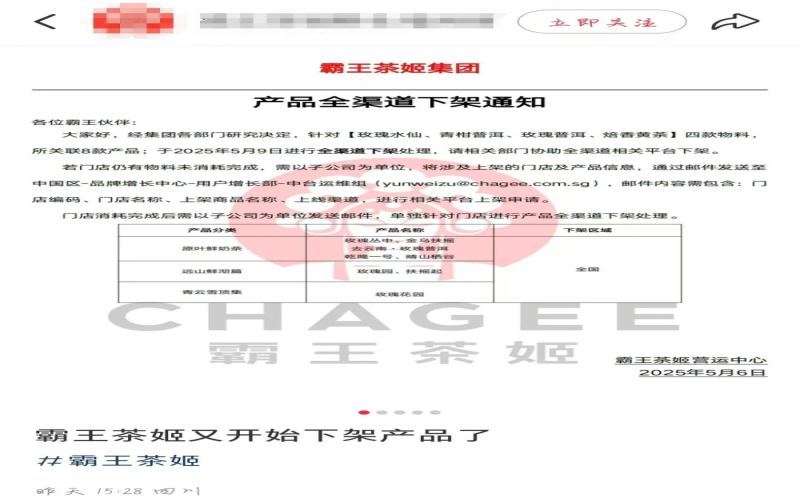
Four tea bases from Chagee will be discontinued across all channels on May 9, affecting 8 drinks including Jinwu Fuyao and Qu Yunnan.
Recently, a notice purported to be an internal all-channel delisting announcement from Chagee has been circulating on social media, drawing widespread attention and discussion among fans. The notice indicates that four ingredients—Rose Narcissus, Green Mandarin Pu'er, Rose Pu'er, and Roasted Fragrance Yellow Tea—along with eight related tea drinks, will be completely discontinued starting May 9, 2025. Among them are several popular limited-edition items such as Golden Crow Fuy [more…]
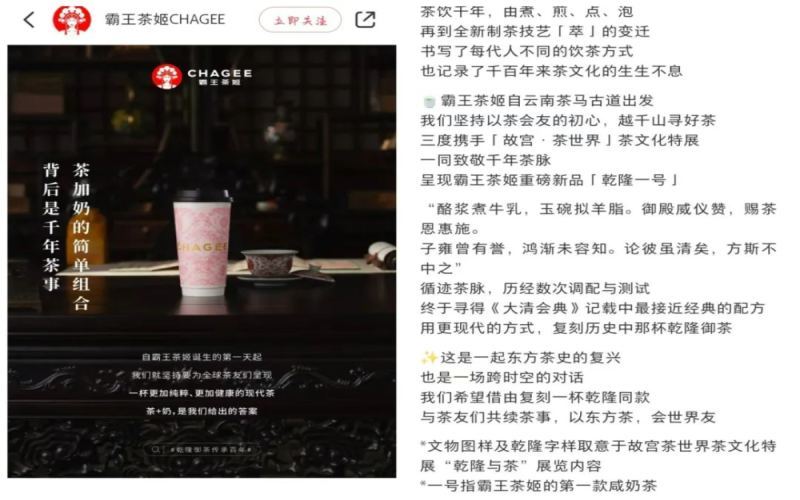
Chagee launches salted milk tea "Qianlong No.1," and netizens are divided: imperial court style or burnt rice flavor?
Chagee recently officially announced the launch of its new product "Qianlong No. 1," claiming to recreate the same milk tea that Qianlong drank based on records in the "Collected Statutes of the Great Qing," and it is also the brand's first salty milk tea. After going on sale, it quickly sparked heated discussion. Netizens joked that the name was "more suitable for office workers," while also seriously reviewing the taste, though opinions were sharply divided—some found it salty and rich like Inner Mongolian milk tea, while others complained it tasted like "Qianlong's bathwater." At the same time, discussions kept bubbling up about whether the product name was awkwardly piggybacking on a historical figure and whether it could continue using the old name "Qingshan Xianshuang." This article compiles viewpoints from all sides to take you through the real look of this palace-style salty milk tea. [more…]